Understanding Skin Undertones: How To Choose The Right Foundation Shade For My Skin
Determining the right foundation shade starts with understanding skin undertones. Every individual has a unique undertone that influences how different colors appear on their skin. Undertones can be classified into three main categories: cool, warm, and neutral, and recognizing your undertone will significantly enhance your foundation selection.
Skin undertones are the subtle hues beneath the surface of your skin, which can remain consistent regardless of tanning or skin color changes. The three primary undertone categories are:
- Cool Undertones: These have hints of pink, red, or blue. People with cool undertones usually have fair skin that burns easily.
- Warm Undertones: Warm undertones possess a golden, yellow, or peach hue. Individuals with this undertone often tan easily and have a sun-kissed glow.
- Neutral Undertones: A blend of both cool and warm, neutral undertones appear balanced. This undertone is versatile and can wear a variety of shades.
To identify your undertone, several methods can be employed. The most popular tests include:
- The Vein Test: Observe the veins on your wrist. Blue veins suggest cool undertones, green veins indicate warm undertones, and a mix points to neutral.
- The Jewelry Test: Silver jewelry often complements cool tones, while gold jewelry typically suits warm tones.
- The White Paper Test: Hold a white piece of paper near your face. If your skin appears more yellow, you likely have warm undertones; if it looks pink, you have cool undertones.
Selecting the Right Foundation Formula
Choosing the right foundation formula is crucial as it caters to different skin types and personal preferences. Various foundation types are available, including liquid, cream, powder, and stick formulations, each offering different levels of coverage and finish.
Skin type plays a pivotal role in selecting the right foundation formula. Here’s how:
- Liquid Foundations: Typically suitable for dry to combination skin, offering a natural finish.
- Cream Foundations: Ideal for dry skin, providing a rich texture and high coverage.
- Powder Foundations: Great for oily skin, helping to absorb excess oil and providing a matte finish.
- Stick Foundations: Offers convenience and is excellent for touch-ups, but may not be ideal for all skin types.
The finish of your foundation also matters:
- Matte Finish: Reduces shine and is perfect for oily skin types.
- Dewy Finish: Gives a fresh and luminous look, suited for dry skin.
- Satin Finish: A balance between matte and dewy, offering versatility for various skin types.
Testing Foundation Shades
To ensure the perfect foundation shade match, testing is essential. The correct method involves applying foundation to your skin in natural lighting, as artificial lights can distort color perception.
Follow this step-by-step approach to find your best match:
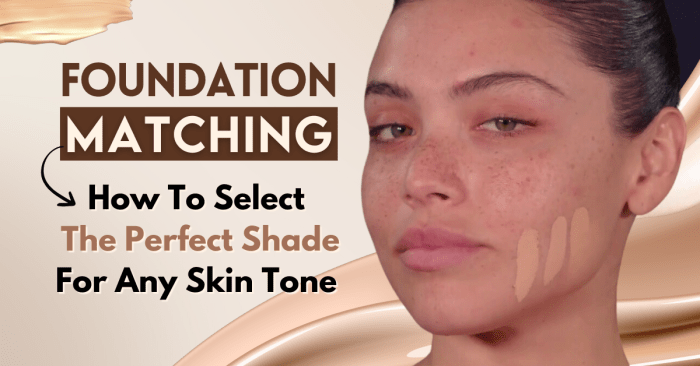
- Choose three foundation shades that seem close to your skin tone.
- Apply a stripe of each shade on your jawline, blending it slightly.
- Step back and evaluate the shades in natural light.
- The shade that disappears or blends seamlessly into your skin is your ideal match.
Testing areas is crucial, particularly on the jawline and neck, as these spots reveal how the foundation works with your natural skin tone, providing a more realistic representation than your hand or wrist.
Tools and Resources for Choosing Foundation
Several tools can simplify the foundation selection process, including swatch cards and shade matching devices available at beauty counters.
Using online shade finders can also be effective. These tools usually require you to input details about your skin tone and undertone, helping to narrow down your options. Additionally, engaging with beauty consultants can provide personalized advice tailored to your skin type and preferences. They can help you navigate numerous products and find the perfect match.
Common Mistakes to Avoid, How to choose the right foundation shade for my skin
When selecting foundation shades, many people make common errors that can lead to mismatched tones. Here are some frequent pitfalls:
- Relying solely on swatches or packaging can be misleading, as colors can vary significantly on different skin types.
- Failing to test foundations in natural light can result in color mismatch.
- Choosing a shade that is too light or too dark relative to your skin tone can create an unnatural look.
To maintain the right foundation match, consider these tips:
- Reassess your foundation as your skin tone may change with seasons or as you age.
- Keep in mind that sun exposure can darken your skin, requiring a deeper shade during summer.
- Always test new foundations in-store or request samples to ensure compatibility.
Shade Adjustments and Customization
Sometimes, your ideal foundation shade might not be available, or it may need adjustment. Using mixers or bronzers can help you tweak shades for a better match. For instance, adding a drop of a darker foundation can deepen a shade without compromising the overall formula.
Creating a custom foundation shade through layering is also possible. Start with a base shade and gradually add additional shades for a personalized result. Always conduct patch tests with any new products to ensure they are compatible with your skin and do not cause irritation.